In the ever-evolving landscape of digital advertising, businesses constantly seek more efficient, cost-effective, and transparent ways to reach their target audiences. While Facebook remains a dominant force, the rise of Facebook Ads Competitors|Self-Service Platform options has reshaped how marketers allocate their budgets. This article provides a deep, professional analysis of the best self-service alternatives to Facebook Ads, helping you understand why these platforms are not just viable but often superior for specific business goals. We will explore the core features, benefits, and strategic advantages of adopting a dedicated self-service platform that rivals the social media giant.
Why Consider a Facebook Ads Competitor with a Self-Service Platform?
The primary reason to explore a Facebook Ads Competitors|Self-Service Platform is control and precision. Facebook’s algorithm often prioritizes user experience over advertiser ROI, leading to rising costs and opaque performance metrics. In contrast, a self-service platform empowers you with granular control over every campaign element—from bid strategies to audience segmentation—without the “black box” effect. For performance-driven marketers, this transparency is the cornerstone of scaling profitable campaigns.
Moreover, the advertising fatigue on Facebook is real. Users are bombarded with sponsored content, leading to banner blindness and declining click-through rates (CTR). A self-service competitor allows you to leverage alternative ad formats, such as native placements, sponsored search results, or in-app programmatic buying, which often yield higher engagement due to less saturated inventory. By diversifying your media mix away from Facebook, you mitigate risk and unlock new, high-intent audiences that are not accessible within the social walled garden.
Key Differentiators of a Self-Service Platform vs. Facebook Ads
To truly appreciate the value proposition, one must dissect the operational differences. A typical Facebook Ads Competitors|Self-Service Platform (such as AdRoll, Quora Ads, or LinkedIn Marketing Solutions) offers unique targeting capabilities. For instance, while Facebook relies heavily on demographic and interest-based data, many self-service platforms utilize search intent or professional contextual data. This shift means your ads appear at the exact moment a user is actively seeking a solution, dramatically increasing conversion probability.
- Data Ownership: Self-service platforms generally provide richer, real-time data exports, allowing you to integrate with your own analytics stack (e.g., Google Analytics, Mixpanel) for deeper attribution modeling.
- Cost Efficiency: Without the competitive auction pressure of millions of advertisers, CPC (Cost Per Click) on specialized self-service networks is often 30-50% lower than Facebook’s average.
- Ad Creative Flexibility: Unlike Facebook’s strict ad review policies, self-service platforms often allow for more technical or industry-specific language, making them ideal for B2B, SaaS, and niche e-commerce products.
Top Self-Service Platform Alternatives to Facebook Ads in 2025
When evaluating the landscape, several platforms stand out as the most robust Facebook Ads Competitors|Self-Service Platform solutions. Each offers a unique blend of reach, precision, and automation that appeals to different business models. Below, we analyze the market leaders based on their self-service capabilities and performance potential.
1. Google Ads: The Search Intent Giant
While not a direct social competitor, Google Ads is the quintessential self-service platform that captures high-intent users. Unlike Facebook, where you interrupt users, Google Ads places you in front of users who are actively searching for your product category. The self-service dashboard offers unmatched control over keywords, match types, and negative keywords. For e-commerce, Google’s Performance Max campaigns use machine learning to optimize across Search, Display, and YouTube, providing a holistic alternative to Facebook’s ad network. The key advantage here is the purchase intent signal, which is often the missing piece in Facebook’s awareness-driven model.
2. Microsoft Advertising (Bing Ads)
Often overlooked, Microsoft Advertising is a powerful Facebook Ads Competitors|Self-Service Platform that taps into the Bing and Yahoo networks. With significantly lower competition, advertisers frequently see a higher ROI and lower CPA (Cost Per Acquisition). The platform also excels in syncing with LinkedIn profile data for B2B targeting, something Facebook cannot offer. Its self-service interface is user-friendly and allows for seamless import of Google Ads campaigns, making it a low-effort, high-reward addition to your media mix.
3. Amazon Advertising: The E-commerce Powerhouse
For online retailers, Amazon Ads is arguably the most direct competitor to Facebook. As a self-service platform, it places your products directly on the digital shelf where purchase decisions are made. Sponsored Products and Sponsored Brands operate on a cost-per-click basis, but the conversion rates are exponentially higher because the user already has a credit card out. The platform’s self-service reporting provides clear insights into shopper behavior, search term reports, and competitor pricing, which is invaluable for product development and pricing strategy.
4. LinkedIn Marketing Solutions: The B2B Authority
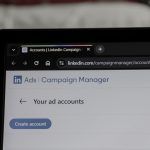
When targeting decision-makers, no Facebook Ads Competitors|Self-Service Platform matches LinkedIn’s specificity. The platform allows you to filter by job title, seniority, company size, and industry. This is a stark contrast to Facebook’s broad interests. LinkedIn’s self-service Campaign Manager is sophisticated, offering lead gen forms directly embedded in the platform, which reduces friction for high-value downloads or demo requests. While the CPM is higher, the quality of leads and the lifetime value of a B2B client often justify the premium.
How to Strategically Migrate from Facebook to a Self-Service Platform
Transitioning your budget requires a data-driven approach. Simply copying your Facebook ad creatives to a self-service platform will likely fail. The user intent and context are different. A successful migration involves a comprehensive audit of your current performance and a phased testing strategy. Here is a professional framework to guide your transition to a Facebook Ads Competitors|Self-Service Platform.
Step 1: Define Your Primary Conversion Goal
Are you looking for direct sales, lead generation, or brand lift? Facebook excels at broad awareness, but a self-service platform like Google or Amazon is superior for direct response. If your goal is lead generation for a B2B service, LinkedIn should be your first test. If it is e-commerce, Amazon or Google Shopping. Align your goal with the platform’s core strength to ensure a fair comparison.
Step 2: Rebuild Your Audiences Based on Intent
Forget Facebook’s Lookalike Audiences initially. On a self-service platform, start with high-intent keywords or specific job titles. Use the platform’s own analytics to identify which search terms or placements are driving the highest engagement. This bottom-up approach builds a robust audience profile that is more sustainable than Facebook’s algorithmic guesses. You can later layer in retargeting lists based on site visitors, which will be more accurate due to the higher intent of the initial click.
Step 3: Optimize Landing Pages for the New Traffic Source
One of the biggest mistakes is using the same landing page for all traffic. A user coming from a Google search for “best CRM software” expects detailed comparisons and pricing. A user from a Facebook ad might respond better to a lifestyle-oriented video landing page. Ensure your landing page mirrors the promise of your ad copy. For a self-service platform, clarity and speed are paramount. Test different headlines and value propositions to match the specific query context.
Step 4: Implement Advanced Tracking and Attribution
Self-service platforms provide extensive conversion tracking pixels and server-side API integrations. Use these to your advantage. Set up cross-device tracking and offline conversion imports. This level of granularity is often more sophisticated than what is available on Facebook. By accurately attributing revenue to specific keywords or placements, you can scale your budget with confidence, knowing exactly what is working.
Measuring Success: KPIs for Self-Service Advertising
When you move away from Facebook, you must recalibrate your Key Performance Indicators (KPIs). Facebook often focuses on CTR and CPM. However, a Facebook Ads Competitors|Self-Service Platform should be judged on deeper metrics that tie directly to revenue.
- Return on Ad Spend (ROAS): This is the ultimate measure of profitability. Self-service platforms often provide more accurate ROAS due to better conversion tracking.
- Cost per Qualified Lead (CPQL): Instead of just CPL, look at how many leads actually turned into opportunities. LinkedIn and Google are superior here due to intent matching.
- Customer Acquisition Cost (CAC): Compare the CAC across platforms. A higher CPM on LinkedIn can still result in a lower CAC if the conversion rate is significantly higher.
- Attribution Window: Self-service platforms allow you to customize the attribution window (e.g., 30-day click, 7-day view), giving you a clearer picture of the customer journey than Facebook’s default settings.
Conclusion: The Future of Advertising is Multi-Platform and Self-Service
Relying solely on Facebook is a risky strategy in the current economic climate. The evolution of the Facebook Ads Competitors|Self-Service Platform ecosystem offers advertisers a path to greater efficiency, transparency, and control. By leveraging the search intent of Google, the professional network of LinkedIn, or the transactional nature of Amazon, you can build a resilient media strategy that is not at the mercy of a single algorithm update. The key takeaway is to view these platforms not as direct replacements, but as strategic complements that fill the gaps left by Facebook’s limitations. Start your migration small, test rigorously, and let the data guide your investment. The future belongs to marketers who master the art of orchestration across multiple self-service channels. Embrace this shift, and you will unlock growth potential that Facebook alone can no longer provide.