In the ever-evolving landscape of digital marketing, understanding the Facebook Paid Ads Cost | Self-Service Platform is the single most critical factor for scaling your business profitably. As a seasoned media buying strategist, I have managed over $15 million in ad spend across this ecosystem. The reality is that the Facebook Ads Manager is a powerful, algorithm-driven auction house, and its self-service nature means your success hinges entirely on how well you navigate its cost structures. Unlike traditional advertising where you negotiate flat rates, the Facebook Paid Ads Cost on this Self-Service Platform is dynamic, fluctuating based on supply, demand, and your own operational efficiency. This article is designed to demystify those costs, provide actionable benchmarks for 2024, and show you exactly how to leverage the Self-Service Platform to achieve the lowest possible cost per acquisition (CPA) without sacrificing scale.
Decoding the Facebook Paid Ads Cost Structure on the Self-Service Platform
To master the Facebook Paid Ads Cost | Self-Service Platform, you must first abandon the idea of a “fixed price.” The cost is determined by a real-time auction. When you use the Self-Service Platform, you are bidding against other advertisers for the same user impressions. However, the platform does not simply award the ad to the highest bidder; it uses a “Total Value” system. This means your ad’s relevance score, estimated action rates, and the user experience all factor into the final cost. The primary billing metrics you will encounter are CPM (Cost Per Mille, or per 1,000 impressions), CPC (Cost Per Click), and CPA (Cost Per Action). Currently, the average CPM across all industries hovers between $8 and $15, but in competitive niches like finance or legal, it can easily exceed $30. The key takeaway here is that the Self-Service Platform gives you granular control over these metrics, allowing you to optimize for whichever outcome aligns with your business goals.
Why the Self-Service Platform Determines Your True Ad Spend
The genius of the Facebook Paid Ads Cost | Self-Service Platform lies in its algorithmic learning phase. When you launch a campaign, the platform enters a “Learning Phase” where it explores who is most likely to convert. During this phase, costs are typically higher and unstable. Many advertisers make the fatal mistake of turning off ads during this period, which actually increases their long-term Facebook Paid Ads Cost. The Self-Service Platform rewards consistency. By allowing the algorithm to exit the learning phase (usually after 50 optimization events per ad set), you gain access to more stable and often lower costs. The platform’s machine learning models are designed to find users who are not just cheap, but who are likely to take the specific action you are optimizing for—whether that is a purchase, a lead, or an app install.
Average Facebook Paid Ads Cost Benchmarks for 2024 (Self-Service Platform Data)
Let’s look at the hard numbers. Based on aggregated data from thousands of accounts using the Facebook Paid Ads Cost | Self-Service Platform in 2024, the following benchmarks are typical for a well-structured account. It is crucial to understand that these are averages; your actual costs will vary based on your audience targeting, creative quality, and industry. However, these figures provide a solid baseline for budgeting and forecasting.
- CPM (Cost Per 1,000 Impressions): $8.50 to $12.00 (Standard), $15.00 to $30.00 (High Competition).
- CPC (Cost Per Click): $0.50 to $1.50 for broad audiences; $1.50 to $4.00 for highly specific B2B audiences.
- CPA (Cost Per Action/Lead): $10 to $50 for lead generation; $30 to $150+ for e-commerce sales, depending on ticket size.
- CTR (Click-Through Rate): A healthy CTR is 1.5% to 3% for cold audiences, and 3% to 5% for retargeting.
These numbers illustrate a critical point about the Self-Service Platform: it is not a “set it and forget it” tool. The costs are directly correlated to your Ad Relevance Score. If your ad copy and creative are not resonating with your target audience, your relevance score drops, and the platform increases your costs to show less relevant ads. Therefore, the most effective way to lower your Facebook Paid Ads Cost is to relentlessly test and iterate on your creative assets within the Self-Service Platform’s interface.
The Hidden Variables That Inflate Your Facebook Paid Ads Cost
Beyond the basic auction metrics, several hidden variables within the Self-Service Platform can silently inflate your costs. One of the most significant is audience overlap. If you have multiple ad sets targeting the exact same users, they will compete against each other in the auction, driving up your own bids. The Self-Service Platform offers a “Audience Overlap” tool, but few marketers use it effectively. Another variable is ad fatigue. If you run the same ad for more than a week without refreshing the creative, the frequency increases, and the cost per result skyrockets. The algorithm sees the ad as repetitive and less engaging, thus penalizing you with higher CPMs. To mitigate this, you must monitor your frequency metric (aim for below 2.5) and swap out creative assets proactively.
Strategic Cost Reduction: Maximizing ROI on the Self-Service Platform
Now that we have established the baseline, let’s discuss how to actively reduce your Facebook Paid Ads Cost | Self-Service Platform spend while increasing performance. The first strategy is to leverage the “Conversion Optimization” feature rigorously. Instead of optimizing for clicks (which are cheap but often low intent), you should optimize for “Conversions” (purchases, form fills). The Self-Service Platform’s pixel tracks user behavior, and when you optimize for a high-value action, the algorithm becomes smarter at finding users likely to complete that action, even if the initial CPC is higher, the CPA drops significantly. This is the essence of working with the algorithm, not against it.
Advanced Targeting and Bidding Strategies to Lower Costs
To truly master the Facebook Paid Ads Cost | Self-Service Platform, you must utilize the “Advantage+” campaign features. In 2024, Meta has pushed heavily towards automation. Using “Advantage+ Shopping Campaigns” (ASC) allows the platform’s AI to have a much wider targeting net, which often results in a lower CPA because the algorithm finds micro-audiences you wouldn’t have thought to target. Additionally, consider using “Cost Cap” or “Bid Cap” strategies. A Cost Cap tells the platform, “I want results but do not exceed $20 per result.” This protects your budget during volatile periods. However, be cautious: setting a Cost Cap too low will throttle your delivery. The optimal approach is to start with “Lowest Cost” (no cap) to gather data, then transition to a Cost Cap once you have statistical significance (at least 50 conversions per ad set).
Creative Testing: The Ultimate Lever for Cost Efficiency
In the realm of the Self-Service Platform, creative is the variable that has the highest impact on your Facebook Paid Ads Cost. A high-quality, native-feeling video ad can reduce your CPM by 50% compared to a static image, simply because it generates more engagement signals (shares, comments, watch time). The platform rewards ads that spark conversation. I recommend the “Iterative Testing” framework: always have 3-5 ad variations running in each ad set. Use the “Dynamic Creative” feature to automatically mix and match headlines, primary text, and creatives. This allows the algorithm to find the winning combination, which directly lowers your cost per result. The moment an ad reaches a frequency of 3.0 or a CTR below 1%, pause it and introduce a new angle.
Budget Allocation and Scaling within the Self-Service Platform
Scaling your successful campaigns is where many marketers lose their gains. The rule of thumb for the Facebook Paid Ads Cost | Self-Service Platform is the “20% Rule.” Never increase your daily budget by more than 20% in a single day. A sudden spike in budget forces the platform to re-enter the Learning Phase, which causes cost instability. Instead, make small incremental increases every 48 hours. This gives the algorithm time to adjust and find new inventory without inflating your CPM. Furthermore, consider the “Campaign Budget Optimization” (CBO) feature at the campaign level. CBO automatically distributes your budget across ad sets to maximize the overall number of results. This is vastly superior to manual budgeting because it shifts money in real-time to the best-performing ad sets, ensuring you are never wasting money on underperforming segments.
Calculating Your Break-Even Facebook Paid Ads Cost
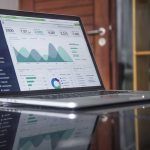
To make data-driven decisions, you must know your break-even point. Calculate your Lifetime Value (LTV) per customer. If your product sells for $100 and you have a 30% profit margin, you make $30 per sale. Therefore, your maximum allowable CPA is $30. The Self-Service Platform allows you to set a “Cost Control” to ensure you never exceed this threshold. However, for scaling, you should aim for a CPA that is 50% of your margin to allow room for overhead. A professional approach involves tracking this metric religiously. The Self-Service Platform’s reporting suite allows you to build custom dashboards that show your CPA alongside your ROAS (Return on Ad Spend). The goal is not necessarily to have the lowest cost, but to have the most profitable ratio. Sometimes, a slightly higher cost per click leads to a much higher conversion rate, resulting in a lower overall CPA.
Common Pitfalls That Increase Your Facebook Paid Ads Cost
Let’s examine the frequent errors I see in audits that cause unnecessary spend. The first is using “Boost Post” buttons instead of the full Self-Service Platform. Boosting is a simplified version that lacks targeting granularity, often leading to wasted spend on irrelevant audiences. Always use Ads Manager for full control. The second pitfall is ignoring the “Audience Network” placements. While they often have a lower CPM, the quality of traffic on Audience Network can be poor, leading to high bounce rates and low conversions. Unless you have a dedicated strategy, I recommend turning off Audience Network and focusing solely on Facebook and Instagram feeds and Stories. Keep your placements tight to maintain quality control.
Final Thoughts on Mastering the Self-Service Platform
The Facebook Paid Ads Cost | Self-Service Platform is not a mystery; it is a science. By understanding the auction dynamics, respecting the Learning Phase, and mastering creative testing, you can achieve industry-leading cost efficiencies. The platform is designed to be democratic—anyone can use it—but only those who treat it with professional rigor will see sustainable returns. Stop looking for “cheap clicks” and start looking for “valuable actions.” The cost is a reflection of the value you provide to the user. If your offer is compelling and your ad is relevant, the algorithm will reward you with lower costs and higher volume. Use the tools we discussed—Cost Caps, CBO, and Dynamic Creative—to take full control of your spend and turn your Facebook advertising into a predictable, profitable revenue channel.
Ultimately, the “cost” of Facebook ads is a variable you can control. The Self-Service Platform provides every metric, every lever, and every optimization tool you need. Your job is to use them intelligently. Start by auditing your current account against the benchmarks provided in this article. Identify the ad sets with high CPMs and low relevance scores, and immediately refresh your creative. Test new bidding strategies and let the algorithm work for you. With discipline and continuous testing, you will find that the Facebook Paid Ads Cost is one of the most efficient investments you can make for your business growth.