In the ever-evolving landscape of digital advertising, the decision between hiring an Adwords Company and utilizing a Self-Service Platform is one of the most critical choices a marketer can make. Both approaches promise to deliver clicks, conversions, and brand visibility, yet they cater to fundamentally different needs, skill sets, and budget structures. As a seasoned SEO and PPC consultant, I have seen countless campaigns succeed or stagnate based solely on this initial strategic fork in the road. This article aims to dissect the nuances of both models, providing a data-driven comparison that will help you determine which path aligns with your business objectives, internal resources, and growth stage. By the end of this guide, you will not only understand the operational differences but also possess a clear framework for maximizing your return on ad spend (ROAS).
Defining the Landscape: The Core Philosophy of Each Model
Before diving into a feature-by-feature comparison, it is essential to establish a baseline definition. An Adwords Company—often referred to as a full-service PPC agency—is a third-party organization that manages your Google Ads (formerly AdWords) account on your behalf. They handle everything from keyword research and ad copywriting to bid management, A/B testing, and monthly performance reporting. In contrast, a Self-Service Platform refers to the digital interface (such as Google Ads directly, or advanced tools like Optmyzr or AdEspresso) that allows you, the business owner or in-house marketer, to control every aspect of your campaigns without external intervention. The former sells expertise and time; the latter sells control and transparency.
Understanding the philosophical divide is crucial. When you hire an Adwords Company, you are essentially purchasing an outcome—a specific ROAS or lead volume target. The agency assumes the operational burden and mitigates the learning curve. Conversely, a Self-Service Platform demands that you invest significant hours in education and testing. It is a DIY approach that offers maximum flexibility but requires a high degree of digital literacy. According to recent industry surveys, roughly 45% of small-to-medium enterprises (SMEs) initially opt for the self-service route due to cost constraints, only to migrate to a managed service after experiencing wasted spend due to improper negative keyword implementation or poor bid strategies.
The Strategic Advantages and Hidden Pitfalls of Hiring an Adwords Company
When you engage a professional Adwords Company, you are leveraging years of aggregated data from multiple accounts. This cross-industry insight is invaluable. These agencies employ certified specialists who are required to pass rigorous Google exams, ensuring they are up-to-date with the latest algorithm changes such as Performance Max or Smart Bidding. They bring a level of strategic foresight that is difficult to replicate in-house. For instance, a competent agency will not simply set up a search campaign; they will structure your account based on the user’s purchase intent, segmenting high-intent transactional keywords from low-intent informational keywords. Furthermore, they provide a dedicated account manager who acts as a strategic partner, proactively suggesting landing page optimizations and budget reallocations.
However, the agency model is not without its challenges. The most significant pitfall is the “black box” phenomenon. Many Adwords Company clients complain about a lack of granular transparency. You might receive a beautifully formatted PDF report showing a 400% ROAS, but you have no idea which specific search terms triggered those conversions, nor do you see the wasted spend on irrelevant mobile app placements. Additionally, there is a conflict of interest regarding budget. Since most agencies charge a management fee based on a percentage of ad spend (typically 10-20%), they have a financial incentive to increase your budget, even if marginal efficiency is declining. To mitigate this, you must demand access to the raw account and insist on weekly “search term report” audits. If an agency refuses to grant you read-only access, that is a major red flag.
When to Choose the Full-Service Agency Route
- Rapid Scaling: If you are in a hyper-growth phase and need to scale from $5,000 to $50,000 monthly spend without breaking the account structure, an agency’s expertise is critical.
- Lack of In-House Talent: If your team consists of general marketers who are juggling social media, email, and SEO, they will not possess the deep specialization required for advanced Google Ads features like audience segmentation or custom conversion events.
- Complex Sales Cycles: For B2B companies with high-ticket items and long consideration phases, an agency is better equipped to implement multi-channel remarketing and lead-scoring integrations.
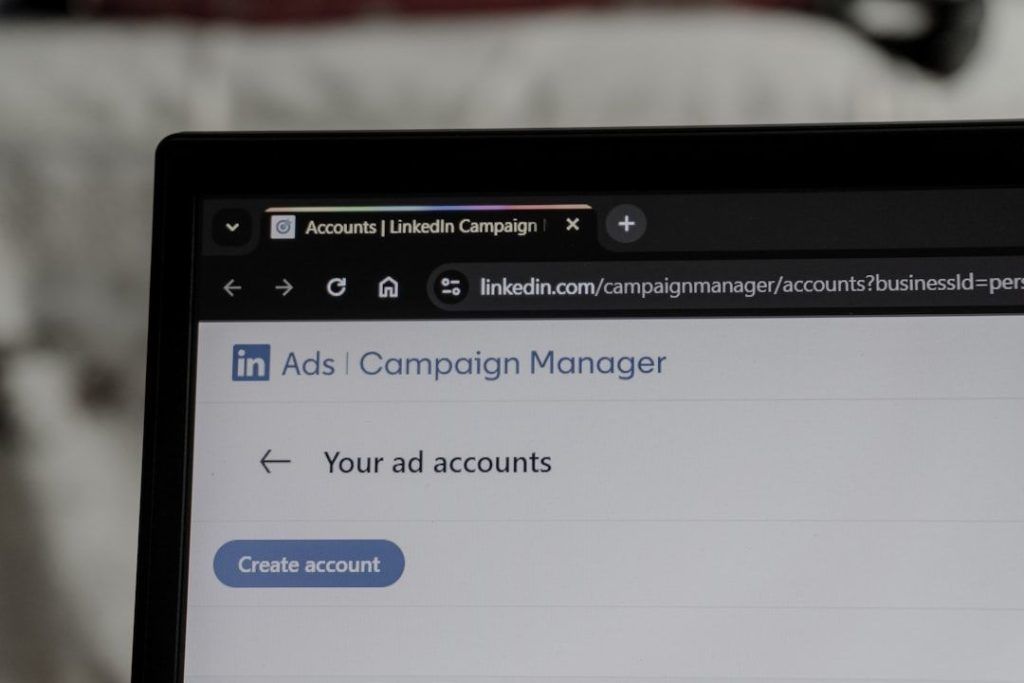
Empowerment and Agility: Mastering the Self-Service Platform
On the other end of the spectrum, the Self-Service Platform has democratized PPC advertising. Twenty years ago, you needed a certified professional just to launch a basic text ad. Today, Google’s own Self-Service Platform is equipped with machine learning algorithms that automate bid adjustments and ad rotation. The primary advantage here is absolute data sovereignty. You have real-time access to every click, impression, and conversion, allowing you to pivot your strategy instantly based on breaking news or inventory changes. For example, if you run an e-commerce store and a specific SKU goes viral on TikTok, you can pause all other ads and shift 100% of your budget to that product within 60 seconds—a maneuver that would take an agency 24-48 hours to execute due to internal communication delays.
Yet, the Self-Service Platform is a double-edged sword. The most common complaint we hear from DIY advertisers is “analysis paralysis.” Google Ads offers dozens of settings, from audience demographics to device targeting to scheduling. A novice user might accidentally set a bid strategy to “Maximize Clicks” instead of “Maximize Conversions,” leading to a flood of irrelevant traffic that drains the budget. Moreover, the platform’s interface changes frequently. What worked in Q1 may be obsolete by Q3. Without a dedicated learning regimen, your campaigns will suffer from “account fatigue,” where quality scores degrade due to poor click-through rates (CTR) caused by irrelevant ad copy that was not tested.
Key Competencies Required for Self-Service Success
- Advanced Excel/Data Skills: You must be comfortable analyzing raw data exports to identify negative keywords and adjust bids based on hour-of-day performance.
- Continuous Education: You need to dedicate at least 5-10 hours per week to reading industry blogs, watching Google’s Skillshop videos, and testing new beta features.
- Emotional Detachment: You must be willing to kill your “favorite” ad group if the data says it is inefficient. Sentimentality has no place in a self-service dashboard.
Cost-Benefit Analysis: Comparing Total Cost of Ownership
When comparing the financial implications, the sticker price is often misleading. A Self-Service Platform appears free (aside from the ad spend itself), but the hidden cost is your time. If you pay yourself or your marketing manager $50 per hour, and they spend 20 hours per month managing campaigns, that is a $1,000 opportunity cost. Furthermore, the cost of errors is higher in self-service. A single misconfigured conversion tag can lead to weeks of unprofitable spend before you notice. Conversely, an Adwords Company charges a transparent management fee, typically ranging from $500 to $2,000 per month for SME accounts, or 15% of spend. However, this fee often includes tools like SEMrush, SpyFu, and Unbounce, which cost $300+ per month separately if you were to buy them for your in-house team.
To illustrate this, let us examine a hypothetical scenario. A business spends $10,000 per month on Google Ads. With a top-tier Adwords Company charging 15% ($1,500), the total cash outlay is $11,500. If the agency achieves a 5:1 ROAS, you generate $50,000 in revenue. In contrast, using a Self-Service Platform, you save the $1,500 fee, but if your inexperience leads to a 3:1 ROAS (which is common for beginners), you only generate $30,000 in revenue. The difference in profit is $20,000, which dwarfs the management fee. Therefore, the choice is not about saving money on overhead; it is about maximizing the efficiency of every dollar spent.
Hybrid Approach: The Best of Both Worlds
In my professional practice, I often recommend a hybrid strategy. You can use a Self-Service Platform for your “always-on” branded campaigns and lower-funnel remarketing lists, where you have complete control and minimal risk. Simultaneously, you hire an Adwords Company for your aggressive prospecting campaigns (e.g., competitor targeting, broad match with smart bidding) that require advanced audience research and copywriting finesse. This allows you to keep your finger on the pulse of your core metrics while delegating the volatile, high-risk exploration to experts. Many modern agencies offer “consultative management” packages, where they do not touch your account but provide monthly strategy calls and account audits—a cost-effective middle ground.
Conclusion: Aligning Your Choice with Your Growth Stage
There is no universally superior option between an Adwords Company and a Self-Service Platform. The decision hinges on your specific context. If you are a startup with a limited budget but abundant time and technical aptitude, the Self-Service Platform is your training ground. It allows you to learn the intricacies of PPC without the pressure of agency contracts. However, if you are an established enterprise where every day of inefficient spend translates to thousands of dollars in lost opportunity, the strategic oversight of an Adwords Company is a prudent investment. The key takeaway here is to conduct a quarterly “make-or-buy” analysis. As your monthly spend grows, the complexity of your account will outpace your internal capabilities. At that inflection point, transitioning to a managed service—or at least a hybrid model—is not a sign of failure but a strategic evolution. Whichever path you choose, remember that the algorithm rewards relevance and user experience. Whether you manage it yourself or delegate it, always keep your customer’s search intent at the core of your keyword strategy.
Ultimately, the most successful advertisers are those who view the Adwords Company versus Self-Service Platform debate not as a binary choice, but as a spectrum of service levels. Start with self-service to build foundational knowledge, then selectively outsource the tasks that drain your time without yielding proportional returns. By doing so, you retain the agility of a nimble marketer while gaining the firepower of a full-service agency. Your PPC success is not determined by who clicks the buttons, but by the clarity of your strategy and the rigor of your analysis.