In the fast-paced world of digital marketing, the ability to launch, monitor, and optimize campaigns without relying on an agency or a dedicated account manager is no longer a luxury—it is a necessity. This is precisely where the power of an Ad Manager Account|Self-Service Platform comes into play. Whether you are a small business owner testing the waters of paid media or a seasoned performance marketer managing multi-channel budgets, understanding the architecture and benefits of a self-service ad management system is critical. In this comprehensive guide, we will dissect what an Ad Manager Account entails, why the Self-Service Platform model is revolutionizing the industry, and how you can leverage it to achieve measurable ROI.
What is an Ad Manager Account and How Does a Self-Service Platform Work?
At its core, an Ad Manager Account|Self-Service Platform is a unified dashboard that grants advertisers direct access to inventory, bidding systems, creative tools, and analytics—without the need for human intermediation. Unlike traditional managed services where you submit a request and wait for a specialist to execute it, a self-service platform puts the levers of control directly in your hands. You log in, set your budget, define your audience parameters, upload your creatives, and press “Go.” The platform’s algorithm then does the heavy lifting of real-time bidding (RTB) across ad exchanges.
This model is built on transparency and agility. For instance, when you operate through an Ad Manager Account on a Self-Service Platform, you can see exactly where every dollar is spent. You are not paying hidden agency fees; instead, you are paying for media inventory and platform usage. This separation of concerns is essential for modern advertisers who demand granular data and immediate adjustments. Moreover, these platforms often integrate with major ad networks like Google Display & Video 360, Meta Ads Manager, and programmatic exchanges, consolidating all your campaigns into one singular interface.
To better understand the mechanics, consider the workflow of a typical session:
- Campaign Setup: You define your objective (e.g., conversions, traffic, brand awareness).
- Audience Targeting: You utilize first-party data, lookalike models, or contextual signals.
- Creative Management: You upload static banners, HTML5 rich media, or video assets.
- Bid Strategy: You choose between CPC, CPM, or CPA, setting your desired ceiling.
- Real-time Optimization: The platform’s AI adjusts placements based on performance signals.
Top 5 Benefits of Using a Self-Service Platform for Your Ad Manager Account
Why should you migrate from a managed service or a direct publisher relationship to a self-service model? The advantages are not just cost-related; they are strategic. Here are the primary benefits that make the Ad Manager Account|Self-Service Platform the preferred choice for digital marketers worldwide.
1. Unparalleled Cost Efficiency and Budget Control
When you utilize a Self-Service Platform, you eliminate the middleman markup. Managed services typically charge a 20-30% overhead on top of media costs. With a self-service Ad Manager Account, you only pay for the platform fee (often a small percentage or a flat monthly rate) plus the actual ad spend. This transparency allows you to reallocate those savings into higher inventory quality or increased frequency. Furthermore, you can set hard caps on daily and total budgets, ensuring that a runaway campaign cannot exhaust your monthly marketing funds without your explicit approval.
2. Full-Funnel Data Ownership and Attribution
One of the most significant pain points with third-party agencies is the lack of access to raw data. With an Ad Manager Account on a Self-Service Platform, every impression, click, and conversion event is recorded in your own reporting suite. You can export raw logs, integrate via API into your data warehouse, and build custom attribution models. This level of access means you are not dependent on the platform’s default dashboard. You can analyze the customer journey across devices and channels, understanding exactly how display ads influence organic search and direct visits.
3. Speed and Agility in Campaign Execution
In the digital sphere, timing is everything. If a competitor launches a disruptive campaign on Monday, you might need to adjust your bidding strategy by Tuesday morning. A Self-Service Platform empowers you to make these changes in seconds. There is no “ticket system” or “request for change” waiting period. You have the immediate authority to pause underperforming placements, change your creative set, or escalate your bid multiplier for a high-value audience segment. This agility directly correlates with competitive advantage.
4. Advanced Targeting Capabilities Without Entry Barriers
Historically, programmatic advertising was reserved for enterprise brands with massive budgets. However, modern Self-Service Platforms have democratized access to premium inventory. Even with a modest monthly budget, you can access private marketplace (PMP) deals and curated targeting options such as geofencing, device graphs, and behavioral segments. The platform’s UI simplifies complex DSP (Demand-Side Platform) functions, allowing you to execute sophisticated strategies like sequential retargeting or frequency capping without needing a PhD in computer science.
5. Scalability Across Multiple Accounts and Brands
If you manage advertising for multiple clients or different product lines, a robust Ad Manager Account structure within a Self-Service Platform allows for seamless scaling. You can create sub-accounts, set user permissions, and maintain separate billing profiles—all under one master login. This granularity ensures that one client’s spending does not bleed into another’s reporting. Moreover, the platform’s dashboard can provide a consolidated view across all sub-accounts for executive-level reporting, saving hours of manual spreadsheet work.
Key Features to Look for in a High-Performing Ad Manager Account
Not all Self-Service Platforms are created equal. To maximize your success, you must evaluate the technical capabilities and user experience of the platform you choose. Here are the essential features that distinguish an enterprise-grade Ad Manager Account from a basic ad network interface.
Intuitive Workflow and Creative Tools
The platform should offer a drag-and-drop builder for HTML5 creatives. If you do not have a design team, the Ad Manager Account should provide templates that are responsive and compliant with IAB standards. Additionally, look for dynamic creative optimization (DCO) features that automatically swap headlines, images, and calls-to-action based on user behavior or weather conditions. This is a hallmark of a sophisticated Self-Service Platform.
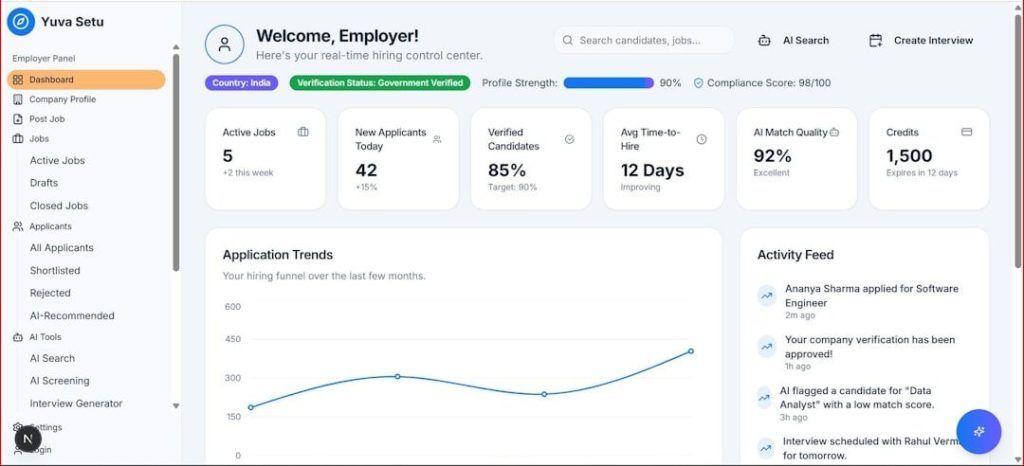
Transparent Reporting and Real-Time Analytics
Your reporting suite must go beyond vanity metrics. A quality platform will offer metrics like viewability (measured by MRC standards), invalid traffic (IVT) detection, and attention metrics. The dashboard should allow you to create custom widgets and schedule automated email reports. Crucially, the platform must support post-bid attribution, showing you the performance of each individual creative placement, not just the aggregate campaign summary.
Fraud Detection and Brand Safety Controls
Ad fraud is a persistent issue in programmatic. Your Self-Service Platform must have built-in pre-bid filtering that blocks known bot IPs and suspicious domains. Furthermore, you need robust brand safety controls, allowing you to exclude news categories, political content, or specific sites that do not align with your brand image. The best Ad Manager Accounts offer a “block list” feature that you can update in real-time, ensuring your ads never appear on unsavory web pages.
Seamless Integrations and API Access
Your Ad Manager Account should not exist in a silo. It needs to integrate seamlessly with your CRM (e.g., HubSpot, Salesforce), your analytics suite (Google Analytics 4), and your content management system. A full-featured API is non-negotiable. This allows you to automate campaign creation, sync conversion events, and pull performance data into custom BI tools. Without API access, you are handcuffed to the platform’s native capabilities, which may lag behind your evolving needs.
Dedicated Support and Educational Resources
Even in a self-service model, you need a safety net. Look for platforms that offer 24/7 live chat support, not just a FAQ page. Additionally, the best platforms provide a comprehensive knowledge base, webinars, and certification courses. This educational component is vital, as mastering the nuances of an Ad Manager Account|Self-Service Platform requires continuous learning. A platform that invests in your education is a partner in your growth, not just a vendor.
How to Optimize Your Campaigns Within a Self-Service Platform
Having an Ad Manager Account is only the first step; the real value lies in how you utilize the data to refine your strategy. Here are three professional tactics to elevate your performance within a Self-Service Platform environment.
Leverage Audience Insights for Lookalike Expansion
Start by analyzing your conversion data inside the platform. Identify the common characteristics of your top 10% of customers—their device types, browsing times, and content interests. Then, utilize the platform’s lookalike modeling tool to find new users who exhibit those same signals. A Self-Service Platform excels at this because it utilizes machine learning across massive data sets, far beyond the reach of a single publisher’s inventory.
Implement Holistic Frequency Capping
One of the hidden benefits of an Ad Manager Account is the ability to control cross-domain frequency. Instead of a user seeing your ad 15 times on different websites, you can cap the frequency at 3 views per user per day across the entire exchange. This not only saves budget but also prevents ad fatigue. You can set different frequency caps for different funnel stages—higher for retargeting, lower for prospecting.
Utilize Split Testing and Automated Rules
Never rely on guesswork. Use the platform’s built-in A/B testing tool to compare different ad variations. Test one variable at a time (e.g., headline, CTA, or background color) to derive statistically significant results. Furthermore, set up automated rules within the Self-Service Platform. For example, you can create a rule that states: “If the CPA exceeds $50 for two consecutive days, reduce the bid by 20%.” This automated optimization ensures you are not constantly watching the dashboard, but you are still in control.
Common Pitfalls to Avoid When Managing Your Ad Manager Account
Even with the best Self-Service Platform, mistakes can be costly. Being aware of these pitfalls will save you from burning your budget and damaging your campaign performance.
- Ignoring Viewability: Do not just look at clicks. If your ads are not viewable (below the fold or in tiny placements), your conversions will suffer. Always filter for viewability above 70%.
- Over-Targeting: While granular targeting is fantastic, too many restrictions can lead to an audience that is too small to scale. Balance precision with reach.
- Neglecting Creative Refresh: Creative fatigue is real. Even if your ad is performing well, users will eventually become blind to it. Refresh your creatives every 2-3 weeks to maintain engagement.
- Forgetting to Track Offline Conversions: If you are a brick-and-mortar business, integrate your CRM data with the Ad Manager Account. The platform may be optimizing for clicks, but your true goal is foot traffic.
Conclusion: Is a Self-Service Platform Right for Your Business?
The decision to move to an Ad Manager Account|Self-Service Platform is a strategic one. It requires a commitment to learning and a willingness to manage the day-to-day intricacies of digital advertising. However, the rewards are substantial: complete transparency, cost savings, and the ability to pivot quickly in response to market changes. For businesses that are data-driven and seek direct ownership of their customer acquisition channels, there is no better alternative. The era of opaque, hands-off advertising is over. By mastering the tools available within a modern Self-Service Platform, you are not just buying ads; you are building a competitive intelligence engine that informs every other aspect of your marketing strategy. Take the time to evaluate your options, start with a pilot budget, and scale what works. Your future self—and your bottom line—will thank you.