Google Ads Cost|Self-Service Platform: A Complete Guide to Budget Control and Campaign Efficiency
Understanding the Google Ads Cost|Self-Service Platform is essential for any business that wants to take full control of its online advertising budget. The Google Ads Cost|Self-Service Platform combines transparent pricing structures with a powerful do-it-yourself interface, allowing advertisers to launch, manage, and optimize campaigns without relying on an agency. This guide explains how the platform works, what drives your costs, and how to get the most value from every dollar you spend.
What the Google Ads Cost|Self-Service Platform Actually Offers
The Google Ads Cost|Self-Service Platform is a pay-per-click advertising environment where you set your own budget, choose your bidding strategy, and manage every aspect of your campaigns directly. Unlike managed service models, the self-service approach puts the advertiser in the driver’s seat. You decide how much to spend daily, which keywords to target, and which audiences to reach.
Key components of the platform include:
- Flexible daily budgets that you can adjust at any time
- Multiple bidding strategies, including Manual CPC, Maximize Clicks, and Target CPA
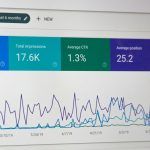
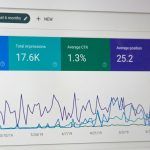
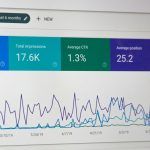
- Real-time cost reporting and performance dashboards
- Campaign experiments to test budget allocation before committing spend
- Automated recommendations that highlight cost-saving opportunities
Because the Google Ads Cost|Self-Service Platform is fully transparent, you can see exactly where your money goes at the keyword, ad group, and campaign level. This visibility is one of the biggest advantages for small and mid-sized businesses that need to justify every marketing dollar.
How Google Ads Cost Is Calculated on the Self-Service Platform
Costs on the Google Ads Cost|Self-Service Platform are driven by competition in the ad auction. Every time a user searches, Google runs an auction among eligible advertisers. Your cost depends on your bid, your Quality Score, and the competitiveness of the keyword. A higher Quality Score can lower your actual cost per click because Google rewards relevant, high-quality ads with better ad positions at lower prices.
Factors That Influence Your Advertising Cost

- Keyword competition: High-demand keywords in industries like finance and insurance cost more per click.
- Quality Score: Expected click-through rate, ad relevance, and landing page experience all affect your cost.
- Ad format and extensions: Rich formats and extensions can improve performance and reduce effective cost per action.
- Geographic and device targeting: Costs vary by location, device type, and time of day.
- Bidding strategy: Automated strategies may spend differently than manual bidding.
Budgeting Best Practices
On the Google Ads Cost|Self-Service Platform, you can start with a modest daily budget and scale as you gather data. Use the platform’s cost forecasting tools to estimate traffic and spend before launching. Set bid caps to prevent overspending, and review the search terms report regularly to eliminate irrelevant clicks that waste budget. Seasonal adjustments, such as increasing budget during peak demand, help you capture high-intent traffic when it matters most.
Why the Self-Service Model Delivers Better Cost Control
The self-service nature of the Google Ads Cost|Self-Service Platform means there are no management fees layered on top of your ad spend. Every dollar goes directly into the auction. You retain full ownership of your account, data, and optimization history. For advertisers who invest time in learning the interface, the self-service model often produces a lower overall cost per acquisition than agency-managed accounts, because decisions are made quickly and based on first-hand performance data.
Additionally, the platform provides granular cost controls that are easy to overlook in managed setups:
- Campaign-level and ad-group-level budget limits
- Shared budgets across multiple campaigns
- Automated rules that pause or adjust campaigns when cost thresholds are hit
- Conversion tracking that ties cost directly to revenue outcomes
Maximizing ROI with the Google Ads Cost|Self-Service Platform
To get the best return from the Google Ads Cost|Self-Service Platform, focus on three pillars: measurement, iteration, and relevance. First, install conversion tracking so every cost can be evaluated against real business results. Second, run structured experiments on bids, ad copy, and landing pages, and reallocate budget toward what performs. Third, improve ad relevance and landing page quality to raise Quality Score and lower cost per click.
Advertisers who treat the Google Ads Cost|Self-Service Platform as an ongoing optimization discipline rather than a one-time setup consistently achieve lower costs and stronger results. With transparent pricing, flexible budgets, and complete control, the platform remains one of the most cost-effective ways to reach high-intent customers at scale.